

Reedham was founded by the Reverend Andrew Reed in 1844.
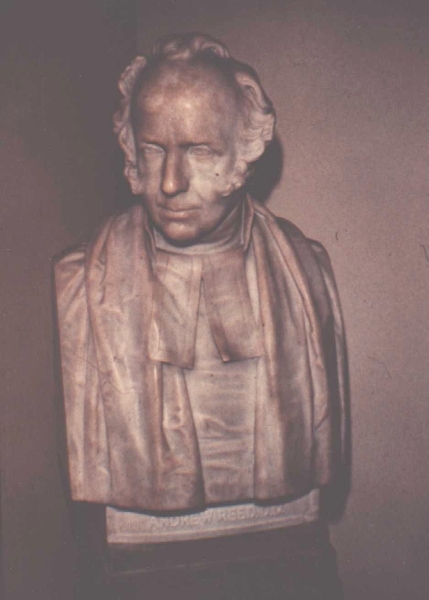
Andrew Reed’s father came from Bridport and in his youth had been set to the trade of watch and clock making. Realising that this trade was expanding, he decided to try his fortune in London. Andrew Reed was born in 1787 and was brought up to follow his father’s trade, but he was of a studious nature with a book always at hand, and his mother’s religious influence was strongly evident. At the age of 18 he gave up the idea of being a tradesman, dismantled the workshop that his parents had provided, disposed of his stock and devoted himself to studying for the Ministry. In his youth as a clock repairer and during a visit to Highgate for that purpose, Andrew had been introduced to the Charity School for Orphans, and this had made a deep and lasting impression on him.
Clearly affected by the plight of orphaned children Andrew became involved and promoted The London Orphan Asylum, The Infant Orphan Asylum and finally the Asylum of Fatherless Children (later to be known as Reedham).
Its first home was a large house on the banks of the River Thames at Richmond. It was to take children of both sexes and at any age and give them food, shelter and education until the age of 13 and 14. The house at Richmond was soon outgrown and a larger one was taken at Stoke Newington; the number of applicants still continued to grow and in 1846, a large mansion was taken over at Stamford Hill.
Andrew toured the country to raise money and at the anniversary dinner in 1849, the Earl of Ducie made an appeal for funds to build a completely new home on the same lines as the previous ventures and this met with a generous response. In 1853 Andrew Reed notes
“At long last … we have purchased an estate three miles from Croydon on the trunk line of the Dover and Brighton Railway. It is paid for (the cost was £3,895). We shall put our Asylum on the crown of the Hill.” Thus Reedham was born, and from now on this is its story.
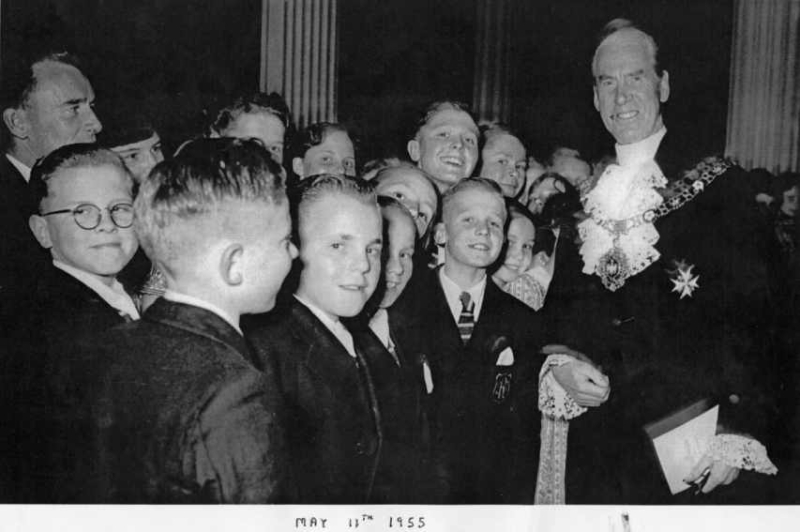
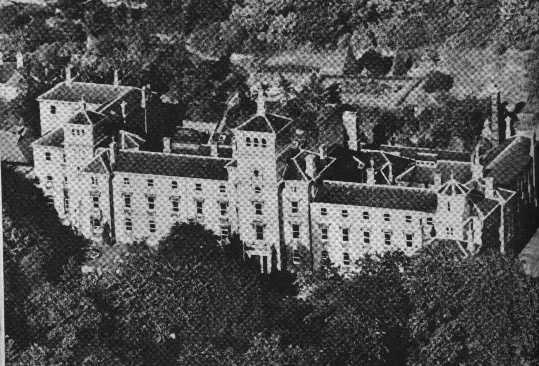
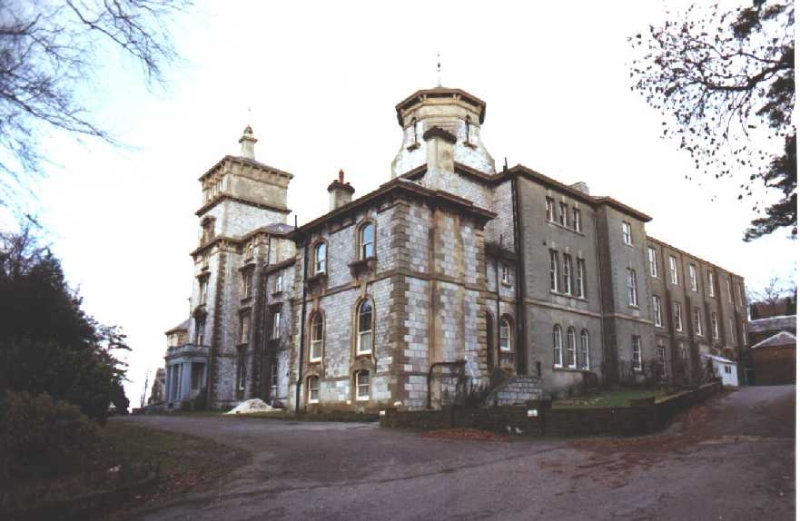
The whole building was shaped like a capital ‘E’ with its three arms pointing back into the hillside. The main tower being at the front of the middle arm, the classrooms were either side, and the playrooms, washrooms, bathrooms and other domestic necessities were located in the outer arms. At the junctures of the two outer arms, small towers surmounted the angles, and above the ground floors were the dormitories and staff quarters. Reedham’s foundation stone was laid by the Lord Mayor of London on the 5th August 1856 and the sounds of axe and hammer continued for the next two years.
In 1858, the sound of children echoed in the Surrey Hills, and for the official opening ceremony by the Lord Mayor of London elect, a temporary platform was erected on the Asylum’s private siding adjacent to Caterham Junction and a special train was run. Children lined the route to the school right up to the main entrance of fatherless children. At the age of 71 Andrew Reed had achieved his ambition. Andrew Reed died on 25th February 1862, four years after his beloved home was opened. The subsequent village surrounding the school and the railway took their name from the school. The name remains to this day.
Although the orphanage was officially open, the raising of money still had to continue. The Reverend TWB Aveling, fellow Congregationalist of Andrew Reed and Honorary Secretary of the school proved to be very able in this regard. The rules of admission were very simple, namely that children should be between the ages of 3 months and 10 years, and that they should be orphaned or fatherless either because of the father’s death or because he was mentally or physically handicapped. The Home was soon completely filled and vacancies only occurred when children left for the outside world. There was, therefore, keen competition for the vacancies when they did occur.
Under the voting system, subscribers to the Home were allowed a number of votes proportional to the amount they subscribed which could be allocated for the admission of orphans known to them or brought to their attention. Children were required to have a minimum number of such votes before they could be admitted, but unsuccessful candidates could carry forward their votes to the next election up to a limit of six elections – elections being held half-yearly. The drawback to this system was that the child whose sponsors were without influence usually had to wait some time before the number of votes to ensure admission had been accumulated, and the child’s greatest need was probably when its name was first put forward. However, the system worked for nearly 100 years until 1939 when the outbreak of war caused its suspension. After the war it was deemed more satisfactory to leave recruitment to the selection of the Board and the voting system was never resumed.